By Margaret Chadbourn
WASHINGTON (Reuters) - President Barack Obama on Wednesday nominated a veteran Democratic congressman to oversee mortgage financiers Fannie Mae and Freddie Mac, a choice that could set up a contentious political debate over housing policy.
Representative Mel Watt, a longtime consumer advocate in Congress, will likely face a confirmation battle in the Senate, where Democrats may need to secure some Republican votes to approve his nomination.
"Mel has led efforts to rein in unscrupulous mortgage lenders, he's helped protect consumers from the kind of reckless risk-taking that led to the financial crisis in the first place, and he's fought to give more Americans in low-income neighborhoods access to affordable housing," Obama said.
If confirmed, the 67-year-old North Carolina lawmaker would replace Edward DeMarco, a career civil servant who has led the Federal Housing Finance Agency in an acting capacity since 2009.
Watt, who has served in Congress for two decades, "knows what it is going to take to help responsible homeowners fully recover," from the housing crisis, Obama said at the White House.
Consumer and housing advocacy groups, along with some Democratic lawmakers, had piled pressure on Obama in recent months to replace DeMarco. The regulator blocked a White House proposal to let government-controlled Fannie Mae and Freddie Mac slash mortgage debt for borrowers who owe more on their taxpayer-backed loans than their homes are worth.
DeMarco has argued that there are other ways to help distressed homeowners that pose less risk to taxpayers, and Republicans see him as a trusty steward for the public.
Fannie Mae and Freddie Mac, which currently back about half of existing U.S. home loans, were seized by the government in 2008 as mortgage losses mounted. They have received $187.5 billion in taxpayer funds to stay afloat, while paying about $58 billion to the Treasury in dividends.
Republicans pin Fannie Mae and Freddie Mac's 2008 failure on government efforts to extend credit to unworthy borrowers.
"I could not be more disappointed in this nomination. This gives new meaning to the adage that the fox is guarding the hen house," said Senator Bob Corker, a Tennessee Republican who sits on the banking committee that will consider whether to send Watt's nomination to the full Senate for approval.
"The debate around his nomination will illuminate for all Americans why Fannie and Freddie failed so miserably."
SHOW TRIAL?
On Capitol Hill, Watt, a member of the House Financial Services Committee, fought predatory lending and pushed for increased loan access for minority and low-income borrowers.
"The feeling remains that the White House is fine with the optics of yet another well-qualified nominee being rejected on an ideological basis," said Isaac Boltansky, a policy analyst with Compass Point Research and Trading. "This move will help the administration build support on the left, which is necessary for the impending budget battles, and it puts Republicans on the other side of a credible nominee."
Obama had nominated North Carolina banking commissioner Joseph Smith for the position in 2011, but he was blocked by Republicans and eventually withdrew his name from consideration.
Before settling on Watt, a former chairman of the Congressional Black Caucus, Obama had considered economist Mark Zandi, a registered Democrat who was an adviser to Republican Senator John McCain's 2008 presidential campaign. When Zandi's name surfaced, some conservatives made clear his ties to McCain were not enough to appease them.
"Congressman Watt has a reputation for integrity, knowledge, and fairness. He certainly can't be said to be a shill for the far left," said Julia Gordon, director of housing finance and policy at the Center for American Progress, a group aligned with Democrats. "It is going to be hard to find a principled basis to oppose his nomination."
Still, analysts expect stiff opposition from Republicans given their strong distaste for the idea of writing down loan principal for underwater borrowers. Watt's home state is the center for Bank of America, based in Charlotte, which has also been one of the top donors to his political campaigns.
The next FHFA director would be expected to guide Fannie Mae and Freddie Mac through an overhaul process that would reduce their role in the housing finance system, though Democrats and Republicans have yet to agree on what should replace them.
Democratic Senate Banking Committee Chairman Tim Johnson said in a statement that Watt is a "superb pick to lead the FHFA" and he wants to move the nomination expeditiously.
"We need someone that will stand up for borrowers," said Tracy Van Slyke, co-director of The New Bottom Line, which is leading a grassroots campaign called "Dump DeMarco." "This is an important victory. It's a good day for millions of homeowners."
(This story has been corrected to fix typo in rein, paragraph three)
(Reporting by Margaret Chadbourn and Steve Holland; Editing by Doina Chiacu and Tim Ahmann)
Source: http://news.yahoo.com/obama-tap-congressman-watt-housing-regulator-sources-115053251.html
sports illustrated westminster dog show 2012 words with friends words with friends phlebotomy dog show best in show

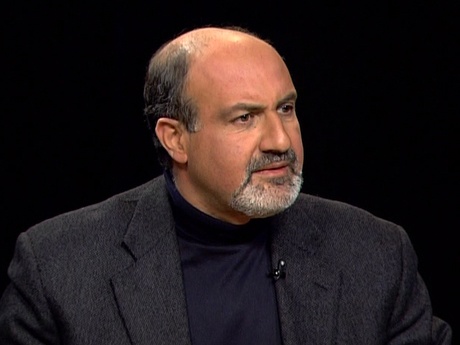 Maverick economist Nicholas Taleb ? challenging the establishment ? Modern-Day Macro-Economists ? Who Needs Them? We are certainly not against people trying to advance economic science. We are also vehemently disagreeing with those who assert that 'there are no economic laws' or that economics is somehow not a science. What these people fail to grasp is that economics ? a branch of the larger science of praxeology (the science of human action) ? is a social science, not a natural science. It therefore requires a methodological approach that is different from that employed in the natural sciences. It therefore is also different in terms of what we can and what we cannot know. We will return to this point further below.? What once used to be a field in which men of towering intellect tried to establish, discuss and lay down the tenets of what was widely considered an entirely new science as recently as the late 19th century, has become a field in which a great many rather mediocre intellectuals are mainly serving the interests of the State. The classical economists such as Ricardo, for all their flaws, did humanity an invaluable service by showing that there are in fact economic laws and that a ruler cannot suspend them, just as he cannot suspend gravity. The era during which the classical economists dominated the new science was one that saw the implementation of a fairly enlightened economic policy ? as close to 'laissez faire' as we ever got ? which led to an? enormous spurt in the growth of real wealth and prosperity between the late 19th and early 20th century. We owe a huge debt to this era of capital accumulation and the men who made it possible ? without it, the world may be a lot poorer than it actually is. Economic science advanced in great strides with the independent discovery of the principle of marginal utility by Carl Menger, William Stanley Jevons and Leon Walras in the 1870s. The Austrian subjectivist school which Carl Menger founded, advanced value theory, price theory, capital theory and monetary theory enormously. However, as many of the most important works were originally published in German language and not translated into English in a timely fashion, it never gained the influence in the English-speaking world it would actually have deserved (ironically, today the Austrian School enjoys far greater support and popularity in the US than in the German-speaking world). One 'problem' is of course that the Austrians advocate the adoption of an unhampered free market economy. This is not based on 'right wing ideology',?? but on a value-free assessment of economic laws. It is a 'problem' only because there would be fairly little, if anything, to do for macro-economists in a truly free market economy. Only exceptional men of great intellect could hope to get enough support to be able to pursue their scientific interest in economics as their main job. In today's era of unbridled statism, a great mass of people are by contrast employed by the State in one form or another, and their output is therefore, as Hans-Hermann Hoppe points out, as a rule both mediocre and ?viciously statist?. To quote him more fully: ?Intellectuals are now typically public employees, even if they work for nominally private institutions or foundations. Almost completely protected from the vagaries of consumer demand ("tenured"), their number has dramatically increased and their compensation is on average far above their genuine market value. At the same time the quality of their intellectual output has constantly fallen. ? What you will discover is mostly irrelevance and incomprehensibility. Worse, insofar as today's intellectual output is at all relevant and comprehensible, it is viciously statist. There are exceptions, but if practically all intellectuals are employed in the multiple branches of the state, then it should hardly come as a surprise that most of their ever-more voluminous output will, either by commission or omission, be statist propaganda.? To put some numbers on this by way of an example: The Fed's board of governors in Washington employed a staff of 220 economists and the 12 regional banks employed another 171 as of 2004 (the most recent number that could be ascertained). The Fed doles out several hundred million dollars every year in research grants and for statistics gathering, so that at any given time, an estimated 500 economists are working on the Fed's behalf in addition to its staff. Some 1,600 economists across the US had listed "domestic monetary and financial theory and institutions" as either their primary (968) or secondary field (717) of study as of 1992. The most influential editors of prominent academic journals are as a rule on the Fed's payroll and provide a 'gate-keeper' function as to what does and what doesn't get published. An article that describes in detail how the economics profession was 'bought by the Fed' can be found here. This is why most economists, who otherwise largely agree that monopolies and price controls are a bad thing, somehow all seem to support the idea that an exception to this rule should be made in the case of money. They simply won't bite the hand that feeds them so generously. Of course, if an economist rejects interventionism and supports the establishment of an unhampered free market, then there is obviously no role for him as an 'economic planner' and 'adviser to policymakers' (except for advising them to stay the hell out of the economy and stop meddling with it).? ? Economics and Mathematics As Ludwig von Mises pointed out, there is no statement in economic science that can be made only by mathematical means and cannot be stated quite clearly in verbal form as well. In his early years, Mises' criticism of mathematical economists was still confined to such fairly innocuous and polite statements. His position on the topic hardened later, and? he eventually called the use of mathematics in economic science utterly 'barren' and a 'vicious method'. We have often pointed out that the econometric approach of gathering statistics, torturing them with mathematical formulas and then deriving hypotheses from them that form the basis for 'economic predictions' and 'policy advice' is as erroneous as it is dangerous (these predictions have a record of constant abysmal failure, and in light of the economic and market upheaval of recent years it should be obvious to all that the same holds for the policy advice given to the 'planners'). For one thing, as Oskar Morgenstern and many others have pointed out, the measurement of the data themselves is fraught with insuperable difficulties. In fact, in most cases there is actually nothing to 'measure', at least not anything that it would be sensible to measure. Economics is not physics, even though modern-day economists are beset by 'physics envy' and are trying to make it more akin to physics by couching their theories in mathematical gobbledegook. That may make many otherwise quite nonsensical papers appropriately incomprehensible to the layman, something that is probably held to imbue them with the necessary 'scientific gloss', but it represents mainly a case of 'garbage in, garbage out'. Economics deals with purposeful, goal-oriented human action ? with human beings who possess volition. It analyzes the means to achieve these goals. It is not a science studying inanimate objects. One would think that it should therefore be rather obvious that there must be a clearly delimited methodological difference between economic theory and the natural sciences. As Murray Rothbard writes on this in the foreword to Ludwig von Mises' work 'Theory and History': ?At the heart of Mises and praxeology is the concept with which he appropriately begins Theory and History, methodological dualism, the crucial insight that human beings must be considered and analyzed in a way and with a methodology that differs radically from the analysis of stones, planets, atoms, or molecules. ? Why? Because, quite simply, it is the essence of human beings that they act, that they have goals and purposes, and that they try to achieve those goals. Stones, atoms, planets, have no goals or preferences; hence, they do not choose among alternative courses of action. Atoms and planets move, or are moved; they cannot choose, select paths of action, or change their minds. Men and women can and do. Therefore, atoms and stones can be investigated, their courses charted, and their paths plotted and predicted, at least in principle, to the minutest quantitative detail. People cannot; every day, people learn, adopt new values and goals, and change their minds; people cannot be slotted and predicted as can objects without minds or without the capacity to learn and choose.? As Rothbard explains further: ?Mises saw that students of human action are at once in better and in worse, and certainly in different, shape from students of natural science. The physical scientist looks at homogenous bits of events, and gropes his way toward finding and testing explanatory or causal theories for those empirical events. But in human history, we, as human beings ourselves, are in a position to know the cause of events already; namely, the primordial fact that human beings have goals and purposes and act to attain them. And this fact is known not tentatively and hesitantly, but absolutely and apodictically.? ? [?] ? ?Is the fact of human purposive action "verifiable"? Is it "empirical"? Yes, but certainly not in the precise, or quantitative way that the imitators of physics are used to. The empiricism is broad and qualitative, stemming from the essence of human experience; it has nothing to do with statistics or historical events. ? Furthermore, it is dependent on the fact that we are all human beings and can therefore use this knowledge to apply it to others of the same species. Still less is the axiom of purposive action "falsifiable." It is so evident, once mentioned and considered, that it clearly forms? the very marrow of our experience in the world.? This is in a nutshell why economic statistics and mathematics should have no place in economic science. It is of course different in the field of business economics and entrepreneurial activity, where economic calculation, even though it lacks precision, is an indispensable tool. ?
 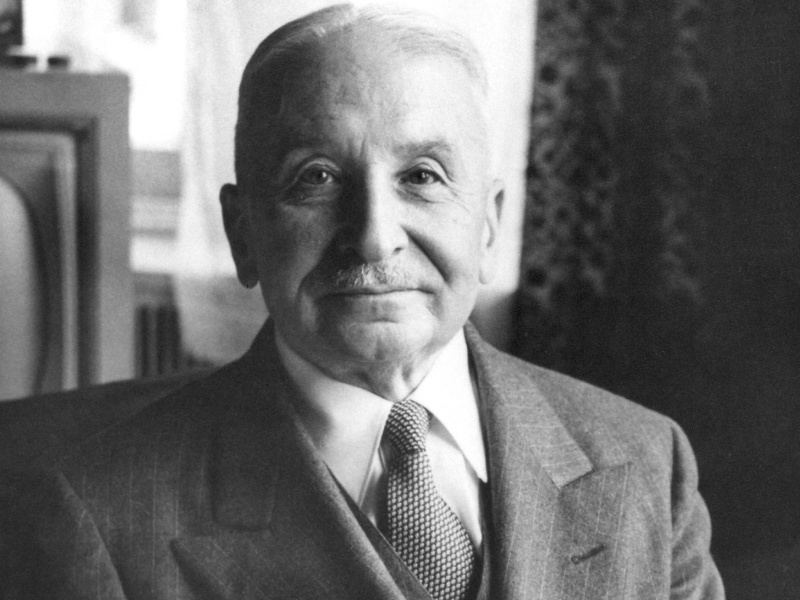 Ludwig von Mises, the father of 'praxeology'; his thoughts on the methodological and epistemological problems of economics remain a bone of contention ? however, he was and remains right. Nicholas Taleb is himself a trained mathematician and statistician, so he may well tackle the papers he intends to critically examine by employing his knowledge in these fields (at least that is what it sounds like in his Facebook announcement). That is certainly a legitimate approach, on account of the above mentioned 'garbage in, garbage out' phenomenon. Most of the models used to support specific policy conclusions are constructed in a manner that ensures that they will spit out the desired results. They simply employ certain assumptions as 'given' and beyond debate, when those assumptions can by no means be considered indisputable facts (as a good example for this? 'GIGO' phenomenon, consider this critique of the infamous Blinder-Zandi 'stimulus study'). Presumably it is this aspect that Taleb will focus his critique on. However, it should be noted that in spite of his employment of 'mathematical tool kits', Taleb is mainly known for his 'black swan' theory, which states that in financial markets, events that are considered extremely rare from a purely statistical standpoint (so called 'fat tails'), are in fact anything but rare. In our opinion this is so because in the course of boom-bust cycles there is always a threshold, a 'tipping point' if you will, where the boom turns into bust.? It is the point at which a critical mass of investors realizes that the boom is no longer sustainable. By acting in concert on this recognition, they tend to produce rather outsized market moves, such as for instance the stock market crash of 1929. Anyway, even if Taleb is not an 'Austrian' ? at least he has to our knowledge never declared himself to be one ? his assessment and analysis of the flaws of modern policy-making and central economic planning as well as the fractionally reserved banking system is quite often spot on. We therefore wish him success in tackling the handmaidens of statism and their pseudo-scientific output. Anyone criticizing the producers of fig leaves for interventionism deserves our support.
 ?
? ?
? ?
? ?
?


